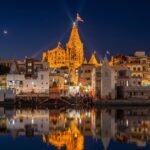


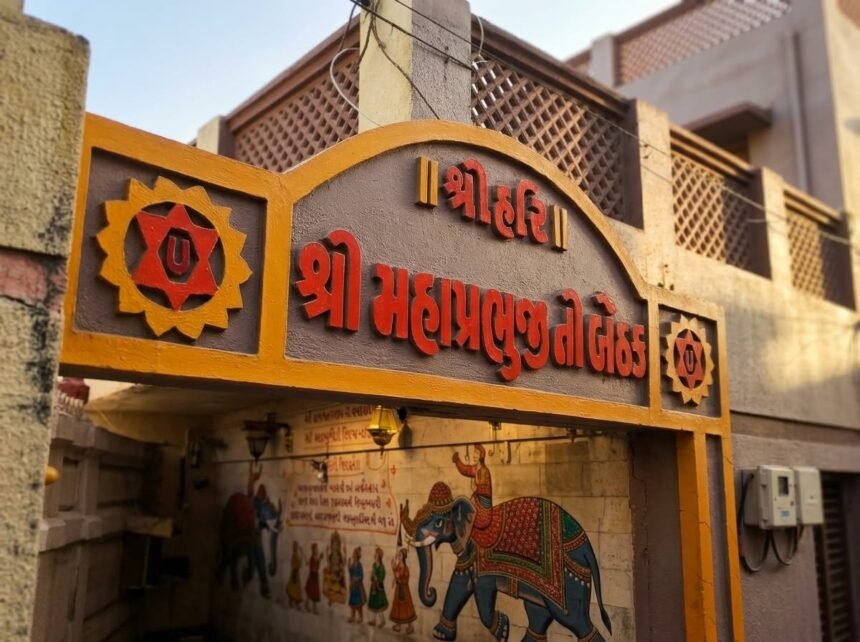
The Bet Dwarka Bethakji is the 62nd Baithak of Shree Mahaprabhuji Vallabhacharya, one of the 84 sacred sites in the Pushtimarg tradition of Vaishnava Hinduism.
- Key Facts About Bet Dwarka Bethakji (62nd Baithak)
- Historical and Mythological Significance
- Mythological Connection to Lord Krishna
- The Name “Shankhodhar”
- Role in Pushtimarg Tradition
- Three Forms of the Baithak
- Archaeological Significance
- Sacred Designation
- Spiritual Importance for Devotees
- Location and Modern Geography
- Address
- What is a Baithak?
- Spiritual Significance
- The 84 Baithaks System
- Contact Information
- Pilgrimage Route
Key Facts About Bet Dwarka Bethakji (62nd Baithak)
Historical and Mythological Significance
Bet Dwarka (also spelled Beyt Dwarka or Shankhodhar) is an ancient sacred island with a history extending over 5,000 years, making it one of the most historically significant pilgrimage sites in India. According to the Mahabharata, the island was known as “Antaradvipa” (meaning inner island), where the Yadava dynasty traveled by boat. The island is believed to be the remnant of the original fort-city of Dwarka built by Vishwakarma on the orders of Lord Krishna, with the larger portion having been submerged by the sea following Krishna’s departure from Earth.
Mythological Connection to Lord Krishna
The island holds profound spiritual importance as the administrative capital of the Yadavas during Krishna’s reign, protected by both the sea and hills. According to the Garga Samhita’s Dwarka Khanda, Lord Krishna performed significant divine miracles here, including delivering Kakshivan (a disciple of Trita Muni who was cursed to become a conch) at the Shankha Sarovar (Shankh Lake). The chanting of “Krishna! Krishna!” by Kakshivan while in conch form reportedly led to his liberation and elevation to Vaikuntha (the divine abode).
The Name “Shankhodhar”
The name “Shankhodhar” derives from a significant mythological event: Lord Matsya (the fish incarnation of Vishnu) slayed a demon named Shankhasura at the location where Shankh Sarovar (Shankh Lake) now stands. The island remains renowned as a major source of conch shells, which are highly valued in Vaishnava traditions as auspicious objects whose sound is considered the source of Dhvani Shakti (divine sound energy).
Role in Pushtimarg Tradition
The Bet Dwarka Bethakji is the 62nd of 84 sacred Baithaks established by Shri Mahaprabhuji (Vallabhacharya, 1473-1531), the founder of the Pushtimarg (Path of Grace) tradition. Baithaks are sites where Shri Mahaprabhuji rested, halted, and conducted spiritual discourses on the Srimad Bhagwat during his three extensive pilgrimages across India on foot over 52 years and 2 months. These journeys were undertaken to spread the principles of “Shudhadvaita Brahmavada” (Pure Non-dualism) and emancipate divine souls.
Three Forms of the Baithak
The Baithak exists in three divine forms: the materialistic form (Adhibhautik Svaroopa) representing the physical structure visible to all; the spiritual form (Adhyatmika Svaroopa) encompassing the divine pastimes and events that occurred there; and the transcendental form (Adhidaivika Svaroopa) representing the continuing presence of Shri Mahaprabhuji himself.
Archaeological Significance
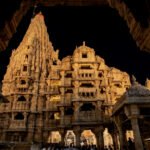
Undersea archaeological evidence reveals that Bet Dwarka was settled during the Late Harappan period of the Indus Valley Civilization or immediately thereafter. Marine archaeology conducted by distinguished Indian archaeologist Prof. S.R. Rao revealed remnants of the ancient fort-city of Dwarka, with findings corroborated by accounts in the Mahabharata. A copper inscription dated 574 CE mentions Dwarka during the Maitraka dynasty, confirming its historical significance.
Sacred Designation
The island is recognized as part of the “Pancha Dwarka” (Five Dwarkas) pilgrimage circuit, a highly significant spiritual journey for devotees of Lord Krishna. Bet Dwarka is also glorified as “Shankhoddhara Tirtha,” with the Shankhoddhara Mahatmya of Garga Samhita stating that those who give charity of gold at this sacred tirtha (pilgrimage site) attain the realm of Lord Vishnu without encountering obstacles.
Spiritual Importance for Devotees
Innumerable Vaishnavas undertake pilgrimages to Bet Dwarka Bethakji specifically to offer Darshan (reverent viewing) and perform Seva (spiritual service). The tranquil surroundings, exotic landscape, fresh breeze, and divine vibrations of the site are believed to facilitate spiritual transcendence. The Baithak represents a direct connection to the teachings and presence of Shri Mahaprabhuji in the Pushtimarg tradition.
Location and Modern Geography
Bet Dwarka is situated approximately 3 kilometers off the coast of Okha in the Devbhumi Dwarka district of Gujarat, measuring roughly 13 kilometers long with an average width of 4 kilometers. The island lies 30 kilometers north of the town of Dwarka and is reached by a 20-minute ferry journey from Okha port. Historically, during the 18th century, the island was controlled by the Gaekwads of Baroda, and following Indian independence in 1947, it became part of Gujarat.
Address
The Baithak is located at Bet Shankhodwar (also known as Shankhodhar), situated above Shankh Talav (Shankh Lake) on the island of Bet Dwarka in Gujarat. The postal address is AT Post Bet (Dwarka) – 361330, Taluka Okhamandal, District Jamnagar, Gujarat. The nearest railway station is Okha.
What is a Baithak?
A Baithak (literally meaning “seat”) is a sacred site in the Pushtimarg tradition where Shri Mahaprabhuji conducted spiritual discourses and recited teachings from the Srimad Bhagwat during his travels across India. Shri Mahaprabhuji spent 52 years and 2 months touring India three times on foot to spread the principles of Pushtimarg and establish the doctrine of “Shudhadvaita Brahmavada.”
Spiritual Significance
Baithaks represent public events and spiritual milestones in the life of Shri Mahaprabhuji. These sites are considered sacred by followers of Pushtimarg, and devotees undertake pilgrimages to these Baithaks to pay homage and perform seva (service). Understanding the history and spiritual significance of each Baithak deepens the devotee’s connection to Shri Mahaprabhuji’s presence and the divine environment.
The Baithaks typically house the original seat of Shri Mahaprabhuji and reflect his simple, tranquil nature. Many feature traditional cow dung flooring, though marble replacements now exist in some locations for upkeep purposes.
The 84 Baithaks System
Beyond Bet Dwarka, Shri Mahaprabhuji established 84 Baithaks across India, primarily concentrated in the Braj region of Uttar Pradesh and western Gujarat. These sites are complemented by 28 Baithaks of Shri Gusainji (his successor), creating a network of 142 sacred sites within the Pushtimarg tradition. The historical records of these Baithaks were meticulously preserved through the efforts of Shri Gokulnathji, the fourth son of Shri Gusainji.
Contact Information
For pilgrimage purposes, the Bethakji can be reached through the local Mukhiyaji (caretaker):
- Ratibhai Mukhiyaji: +91-94260-273-56
- Atulbhai Mukhiyaji: +91-99748-415-00
- Landline: +91-02892-262-414
Pilgrimage Route
Bet Dwarka Bethakji is often visited as part of a comprehensive Vaishnava pilgrimage circuit in the Dwarka region. Devotees typically visit multiple Baithaks in sequence, including Harikund Baithak (60th), Gopi Talav Baithak (61st), Mulgomta Baithakji (59th), and others in the surrounding area.