


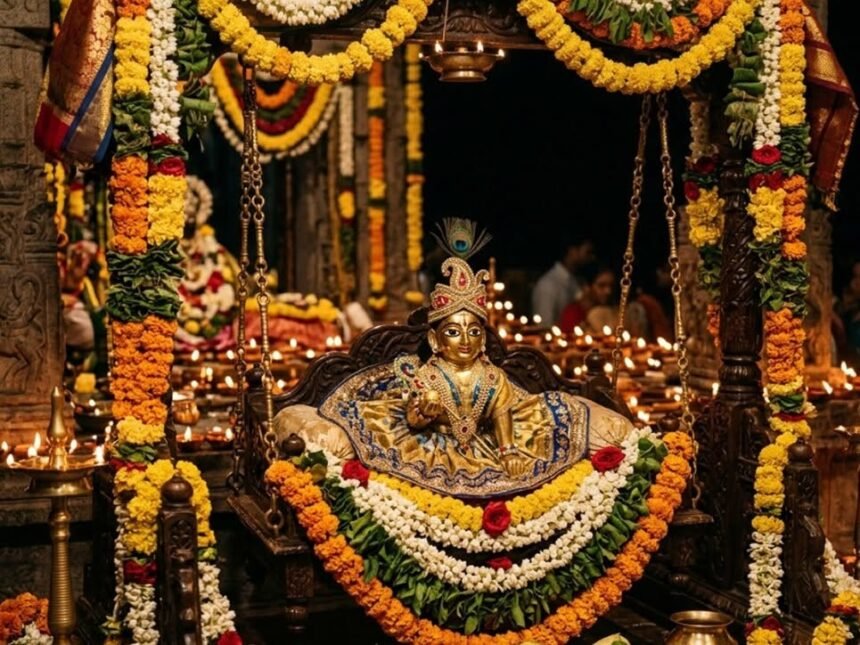
If you have ever tried to plan your festive wardrobe or schedule a fast for Lord Krishna’s birthday, you have likely run into the exact same dilemma as millions of others: Wait, is Janmashtami today, or is it tomorrow?
Every time this vibrant festival rolls around, group chats light up with debates over the correct date. Temples seem to be operating on different schedules, and government holidays often span across multiple days. But this scheduling quirk is not a mistake. It is a fascinating blend of ancient astronomy, sectarian traditions, and precise cosmic alignments.
Here is exactly why the birth of the butter-stealing deity cannot be contained within a single twenty-four-hour block.
The Problem: The Clash of Cosmic Calendars
The root of our confusion lies in the calendar hanging on your wall. The modern Gregorian calendar is strictly solar, changing rigidly at the stroke of midnight. However, traditional Hindu festivals operate on the Lunisolar calendar (the Panchang).
In Vedic astrology, a day (or Tithi) does not begin at midnight; it is calculated based on the angular distance between the sun and the moon. A lunar day can begin at dawn, mid-afternoon, or right before dinner. When you are trying to map a fluid lunar phase onto a rigid solar calendar, overlaps are inevitable.
Lord Krishna was born on the eighth day (Ashtami) of the dark fortnight (Krishna Paksha) in the month of Bhadrapada. But to pinpoint the exact moment of celebration, astrologers must track a highly specific set of cosmic conditions.
The Solutions: Decoding the Two-Day Phenomenon
To understand why the celebrations are split into two days, we have to look at the three primary rules that govern Janmashtami.
1. The Smarta vs. Vaishnava Divide
The most prominent reason for two different dates is the existence of two major philosophical schools in Hinduism, which calculate the start of the festival differently:
- The Smarta Tradition: Followers of this tradition generally celebrate Janmashtami on the very first day that the Ashtami Tithi coincides with midnight. They focus strictly on the calendar date of the birth.
- The Vaishnava Tradition (including Marjadi Pushtimarg Vaishnav, Swaminarayan Sampradaya, ISKCON): Vaishnavas observe stricter rules. They require the Ashtami Tithi and the Rohini Nakshatra (the birth star of Lord Krishna) to be active precisely at sunrise (Udaya Tithi). Because of these stringent astrological requirements, Vaishnava temples almost always celebrate the festival a day after the Smarta community.
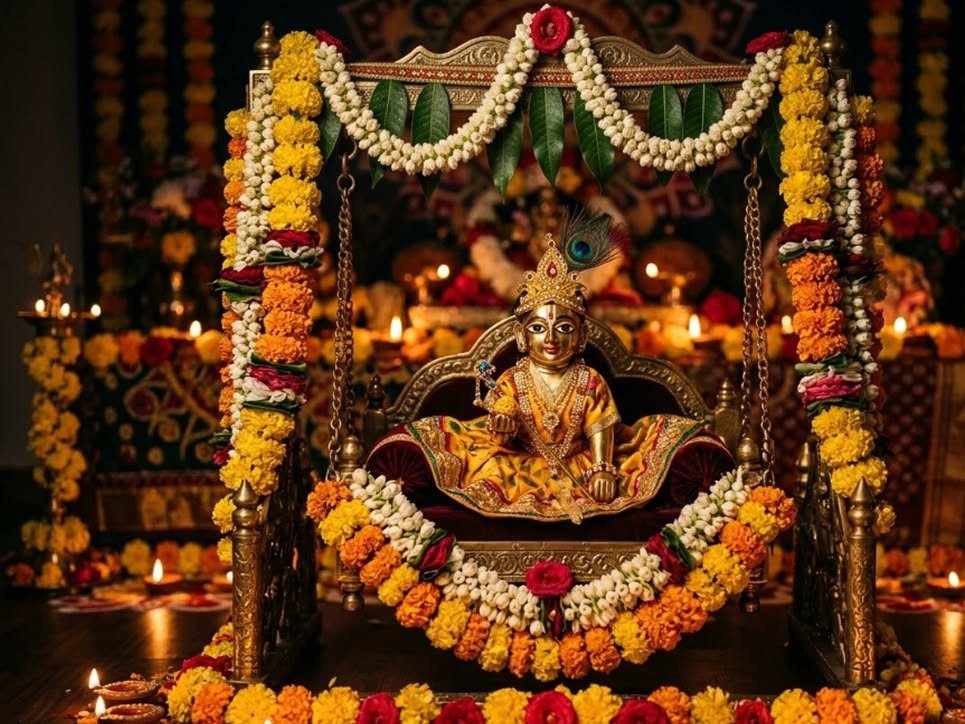
2. The Midnight Birth (Nishita Kaal)
Scriptures state that Devaki gave birth to Krishna in a prison cell at the absolute darkest hour of the night. This specific window is known as the Nishita Kaal.
Because this midnight window serves as the climax of the festival, the primary rituals literally bridge two calendar days. The main Maha Puja (grand prayer) begins late in the evening of the first day and concludes in the early hours of the next, naturally stretching the celebration across the midnight boundary.
3. The Perfect Cosmic Storm
For the ultimate Janmashtami alignment, three things must happen simultaneously: the month of Shravana/Bhadrapada, the Ashtami Tithi, and the Rohini Nakshatra. Because lunar days and nakshatras move at different speeds, they rarely line up perfectly for a full 24 hours. The festival is stretched to honor whichever day holds the most significant portion of this holy convergence.
Examples: How the Festivities Actually Unfold
This astrological split works out perfectly for the devotees, creating a natural flow of spiritual and cultural events across a two-day period.
- Day One: The Spiritual Vigil: The first day is highly internal and devotional. Devotees observe rigid fasts (Nirjala or fruit-based), spend the day singing bhajans, and read the Bhagavad Gita. As midnight approaches, temples bathe the deity in milk and honey (Abhishek), culminating in the joyous midnight Aarti to welcome the newborn Krishna.
- Day Two: The Cultural Explosion: Once the sun rises the next morning, the mood shifts from solemn devotion to exuberant joy. This is the day of Dahi Handi. Communities gather in the streets to form massive human pyramids, attempting to smash clay pots filled with freshly churned butter. It is a chaotic, adrenaline-fueled reenactment of Krishna’s childhood pranks as the Makhan Chor (butter thief).
Advanced Topics: The Mathematics of the Panchang
For those fascinated by Vedic mathematics, the calculation of Janmashtami becomes even more complex when adjusting for global geography.
Because the Panchang relies on the exact moment of sunrise in a specific location, the Vaishnava Janmashtami in New York City might technically fall on a different date than the Vaishnava Janmashtami in New Delhi. Organizations like ISKCON employ sophisticated software to calculate the exact Udaya Tithi (sunrise timing) and Nishita Kaal for every time zone globally, ensuring that rituals are performed precisely when the cosmic conditions are met in that specific hemisphere.
Ultimately, this two-day celebration is not a calendar error. It is a testament to an ancient, highly sophisticated system of timekeeping that honors the rhythms of the cosmos over the ticking of a clock.