


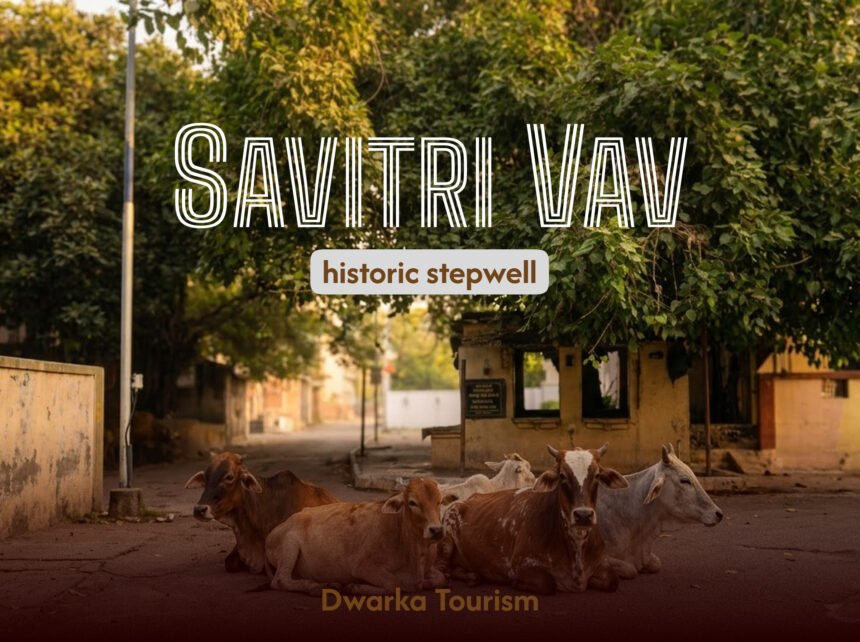
Savitri Vav is one of the lesser-known heritage attractions in Dwarka, Gujarat, offering a fascinating glimpse into the region’s traditional stepwell (vav) architecture and ancient water-management systems. Located within the sacred landscape of Dwarka, this historic structure provides a quieter and more reflective experience compared with the city’s busy pilgrimage sites.
- Savitri Vav Tourist Information
- Why Visit Savitri Vav?
- History of Savitri Vav
- Architectural Features
- The Importance of Stepwells in Gujarat
- Best Time to Visit
- Photography at Savitri Vav
- How to Reach Savitri Vav
- Nearby Attractions
- Suggested Heritage & Temple Itinerary
- Visitor Tips
- Frequently Asked Questions (FAQs)
For travelers interested in heritage, architecture, photography, and local history, Savitri Vav is a worthwhile stop while exploring Dwarka. It pairs especially well with visits to Dwarkadhish Temple, Gomti Ghat, Sudama Setu, and Bhadkeshwar Mahadev Temple, making it an excellent addition to a full-day Dwarka sightseeing itinerary. Its totally Hidden Darshan spot that known by locals in Dwarika.
Savitri Vav Tourist Information
| Detail | Information |
|---|---|
| Location | Dwarka, Devbhoomi Dwarka district, Gujarat, India |
| Type | Historic stepwell (Vav) |
| Famous For | Traditional Gujarati stepwell architecture and heritage value |
| Entry Fee | Usually free |
| Best Visit Duration | 15–30 minutes |
| Best Time to Visit | October to March |
Why Visit Savitri Vav?
Savitri Vav is ideal for visitors who want to experience a different side of Dwarka beyond its famous temples. Unlike the bustling pilgrimage atmosphere around Dwarkadhish Temple, this historic stepwell offers a peaceful heritage setting, making it perfect for architecture lovers, history enthusiasts, and photographers.
Highlights
History of Savitri Vav
Stepwells, locally known as vavs, were among the most remarkable architectural achievements of western India. Built primarily to store water, provide drinking water, and offer cool resting spaces, they played an essential role in the dry and semi-arid regions of Gujarat.
Savitri Vav is believed to be part of this long tradition of community water architecture. Although it is not as monumental as Rani Ki Vav in Patan or Adalaj Stepwell near Ahmedabad, it represents the same cultural heritage that made Gujarat famous for its beautifully designed underground water structures.
Historically, stepwells served multiple purposes:
In a pilgrimage city such as Dwarka, structures like Savitri Vav would have been especially important for supporting devotees, merchants, and travelers visiting the sacred town.
Architectural Features
Savitri Vav reflects the characteristic features of traditional Gujarati stepwell architecture.
What to Look For
The design demonstrates how ancient builders combined engineering, aesthetics, and practicality to create structures that remained functional for centuries.
The Importance of Stepwells in Gujarat
Gujarat is internationally known for its stepwell architecture, and Savitri Vav belongs to this broader architectural tradition.
Famous stepwells in Gujarat include:
While Savitri Vav is more modest in scale, it provides travelers with a local and accessible example of the same architectural heritage that made Gujarat one of the world’s great stepwell regions.
Best Time to Visit
The best time to visit Savitri Vav is October to March, when the weather in Dwarka is pleasant and comfortable for walking and sightseeing.
Seasonal Guide
| Season | Recommendation |
|---|---|
| Winter (Oct–Mar) | Best time to visit |
| Summer (Apr–Jun) | Visit early morning or evening |
| Monsoon (Jul–Sep) | Atmospheric but may be damp |
Winter offers the most comfortable conditions for exploring heritage sites and nearby attractions on foot.
Photography at Savitri Vav
Savitri Vav is an excellent location for heritage and architectural photography.
Best Photography Times
Best Angles
Because the site is usually less crowded than major temples, photographers often find it easier to capture clean compositions here.
How to Reach Savitri Vav
From Dwarkadhish Temple
Savitri Vav is located within the Dwarka town area and can be reached easily by walking, auto-rickshaw, or local taxi, depending on your exact route.
By Train
By Air
By Road
Nearby Attractions
Savitri Vav can easily be included in a Dwarka heritage and temple circuit.
Must-Visit Places Nearby
Suggested Heritage & Temple Itinerary
Half-Day Heritage Circuit
- Dwarkadhish Temple
- Gomti Ghat
- Sudama Setu
- Savitri Vav
- Bhadkeshwar Mahadev Temple
Full-Day Dwarka Circuit
- Dwarkadhish Temple
- Gomti Ghat
- Sudama Setu
- Savitri Vav
- Rukmini Devi Temple
- Nageshwar Jyotirlinga
- Bet Dwarka
Visitor Tips
Frequently Asked Questions (FAQs)
Is Savitri Vav worth visiting?
Yes. Savitri Vav is worth visiting for travelers interested in Gujarat’s stepwell architecture, local history, and photography. It offers a peaceful break from Dwarka’s busier pilgrimage sites.
What is Savitri Vav famous for?
Savitri Vav is famous for its traditional Gujarati stepwell architecture and its role as part of the region’s historic water-management heritage.
Is there an entry fee for Savitri Vav?
Entry is generally free, although local management policies may change over time.
How much time is needed to visit Savitri Vav?
Most visitors spend 15–30 minutes exploring the stepwell and taking photographs.
What is the best time to visit Savitri Vav?
The best time is October to March, especially during the morning or late afternoon.
Can I visit Savitri Vav and Dwarkadhish Temple on the same day?
Yes. Savitri Vav is located within the Dwarka sightseeing area and can easily be combined with Dwarkadhish Temple, Gomti Ghat, Sudama Setu, and Bhadkeshwar Mahadev Temple.
Is Savitri Vav suitable for photography?
Yes. The descending stone steps, geometric patterns, and heritage atmosphere make it a good location for architecture and travel photography.
Are stepwells common in Gujarat?
Yes. Gujarat is famous for its historic stepwells, including Rani Ki Vav, Adalaj Stepwell, and Dada Harir Vav, and Savitri Vav belongs to this important architectural tradition.
Can senior citizens visit Savitri Vav?
Yes, but caution is advised while using the steps, especially if the surface is uneven or damp.
Which attractions can be visited together with Savitri Vav?
The most popular combination includes Dwarkadhish Temple, Gomti Ghat, Sudama Setu, Bhadkeshwar Mahadev Temple, Rukmini Devi Temple, and Nageshwar Jyotirlinga.
Cultural and Historical importance
Savitri Vav offers a fascinating glimpse into Dwarka’s lesser-known heritage and architectural traditions. While the city is celebrated primarily for its Krishna temples and coastal pilgrimage sites, this historic stepwell reminds visitors that Dwarka was also shaped by centuries of engineering skill, water conservation, and community life.
Whether you are a history enthusiast, architecture lover, photographer, or traveler exploring Gujarat’s cultural heritage, Savitri Vav is a rewarding stop that adds depth and variety to any Dwarka itinerary.