


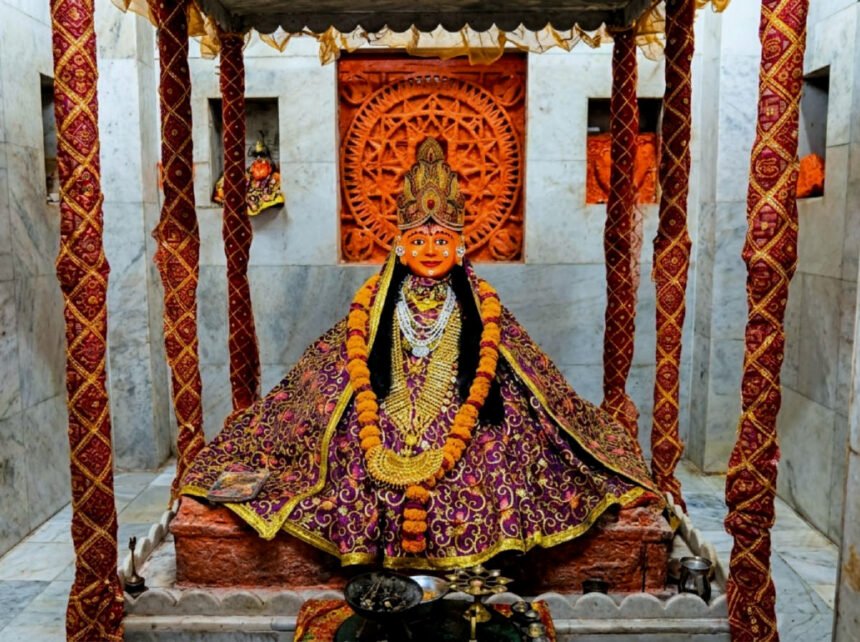
Bhadrakali Mata Temple in Dwarka is a small but culturally significant shrine dedicated to Goddess Bhadrakali, located in the historic heart of Dwarka, Gujarat. Away from the imposing scale of the Dwarkadhish Temple, the shrine offers a more intimate experience of the city’s Shakta and Shaiva traditions.
- Bhadrakali Mata Temple Timings
- Bhadrakali Mata Temple Tourist Information
- Why Visit Bhadrakali Mata Temple?
- Bhadrakali Mata and the Shaktipeeth Tradition
- Who Is Goddess Bhadrakali?
- History of Bhadrakali Temple in Dwarka
- Architecture of Bhadrakali Mata Temple
- What to Expect During Your Visit
- Best Time to Visit
- How to Reach Bhadrakali Mata Temple
- Nearby Attractions
- A Convenient Dwarka Temple Circuit
- Photography Tips
- Visitor Etiquette
- Frequently Asked Questions
The temple is particularly interesting for travelers who want to explore Dwarka beyond the main Krishna pilgrimage circuit. Local and pilgrimage sources refer to the shrine as a Shaktipeeth, although lists of Shaktipeeths vary across traditions and sources. Some devotional listings specifically identify Bhadrakali at Dwarka as a Shaktipeeth.
Its location near Bhadrakali Chowk and Bhadrakali Road, close to the central Dwarka pilgrimage area, also makes it easy to include in a walking or short local sightseeing circuit. A heritage survey by Urban Management Centre identifies Bhadrakali Temple opposite the Municipality Office at Bhadrakali Chowk and dates the broader heritage structure to the period 1411–1757 under its administrative classification.
Bhadrakali Mata Temple Timings
Temple Schedule
Bhadrakali Mata Temple Tourist Information
| Detail | Information |
|---|---|
| Temple | Bhadrakali Mata Temple |
| Location | Bhadrakali Chowk, Dwarka, Devbhumi Dwarka, Gujarat |
| Deity | Maa Bhadrakali |
| Tradition | Shakta worship |
| Pilgrimage significance | Referred to as a Shaktipeeth in some traditional listings |
| Nearby landmark | Dwarkadhish Temple / Bhadrakali Chowk |
| Visit duration | About 15–30 minutes |
| Entry fee | No standard entry fee is publicly documented |
| Best for | Pilgrims, heritage travelers, temple explorers and photographers |
Why Visit Bhadrakali Mata Temple?
For many travelers, the attraction of Bhadrakali Mata Temple lies in its quiet, local character.
While Dwarka is internationally known for Lord Krishna and the Dwarkadhish Temple, traditions associated with the city also preserve older forms of Shiva and Shakti worship. One travel account describes Siddheshwar Mahadev and Maa Bhadrakali as important presiding deities associated with the city before Krishna’s legendary establishment of Dwarka.
A visit is particularly worthwhile when you want to:
Bhadrakali Mata and the Shaktipeeth Tradition
The term Shaktipeeth refers to sacred sites associated in Hindu tradition with the story of Sati and Lord Shiva. According to the widely known mythology, after Sati’s self-immolation at Daksha’s yajna, Shiva carried her body while grieving. Different traditions describe how the sacred sites associated with parts of Sati’s body or ornaments came into being.
Several lists of Shaktipeeths exist, and their number and identification can differ between textual and regional traditions. One devotional compilation explicitly lists Bhadrakali at Dwarka among the Shaktipeeth sites in Gujarat.
Because Shaktipeeth traditions are not completely uniform, a tourism page should avoid presenting a single identification as universally accepted. For travelers and pilgrims, the important point is that Bhadrakali Mata Temple is locally revered in the Shakti tradition and is identified as a Shaktipeeth by some pilgrimage sources.
Who Is Goddess Bhadrakali?
Bhadrakali is a powerful form of the Divine Mother and is associated with Shakti, divine feminine energy.
The name is commonly understood through two components: Bhadra, conveying auspiciousness or well-being, and Kali, connecting the form with the transformative power of the Goddess.
As with many Devi traditions across India, Bhadrakali can be understood both as a protective mother and as a powerful force that removes negativity and restores balance.
For visitors unfamiliar with Shakta traditions, the simplest way to understand the shrine is as a temple dedicated to the protective and powerful aspect of the Divine Mother.
History of Bhadrakali Temple in Dwarka
The historical record of the present temple is less extensively documented online than that of Dwarkadhish Temple. However, the temple occupies an established historic position within Dwarka’s old urban fabric.
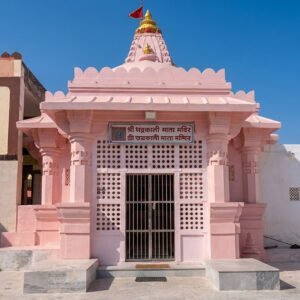
A City Heritage / HRIDAY survey of Dwarka lists Bhadrakali Temple opposite the Municipality Office at Bhadrakali Chowk and places its likely construction period within 1411 to 1757, while describing it as a religious/worship building associated with the Bhadrakali trust.
The same heritage listing identifies nearby Aashapura and Harsidhhi Mata Temple and other traditional structures in the Bhadrakali Chowk area, indicating that this part of Dwarka contains a cluster of religious and historic buildings rather than being a standalone modern shrine.
This makes Bhadrakali Mata Temple especially interesting for visitors interested in Dwarka’s lesser-known urban heritage.
Architecture of Bhadrakali Mata Temple
Bhadrakali Mata Temple is relatively modest compared with the monumental Dwarkadhish Temple, but its compact architecture has its own appeal.
Available photographs show a light-colored stone temple with:
The temple’s scale makes it feel quite different from Dwarka’s major pilgrimage complexes. Instead of overwhelming visitors with monumental size, it provides a more intimate neighborhood-temple atmosphere.
The surrounding Bhadrakali Chowk area is also useful for travelers who want to see the everyday religious landscape of old Dwarka, rather than only its headline monuments.
What to Expect During Your Visit
A visit to Bhadrakali Mata Temple is generally best approached as a short spiritual and heritage stop.
The temple is suitable for travelers who prefer:
As with any active Hindu shrine, visitors should maintain appropriate dress and follow instructions from temple staff or priests.
Best Time to Visit
For a broader Dwarka trip, October to March is generally the most comfortable period for sightseeing because the weather is more pleasant.
For Bhadrakali Mata Temple itself, mornings and early evenings can be especially appealing because these are traditional periods for temple visits and prayer.
Festival Periods
The temple may be particularly lively during major Devi festivals and Navratri, although the exact local celebration schedule should be checked before travel.
How to Reach Bhadrakali Mata Temple
From Dwarkadhish Temple
Bhadrakali Mata Temple is in the central Dwarka area, making it convenient to combine with a visit to the Dwarkadhish Temple.
The surrounding area is served by local roads, auto-rickshaws and pedestrian routes. Hotels and businesses around Bhadrakali Road and Bhadrakali Chowk also use the temple as a local landmark.
By Train
Dwarka Railway Station is the main rail connection for the city. From the station, visitors can take an auto-rickshaw or taxi toward the central temple area.
By Road
Dwarka is connected by road with Jamnagar, Rajkot, Ahmedabad and other major Gujarat destinations.
By Air
Travelers arriving by air can use airports serving the wider Saurashtra region and continue to Dwarka by road.
Nearby Attractions
One of the biggest advantages of visiting Bhadrakali Mata Temple is its location within Dwarka’s compact pilgrimage landscape.
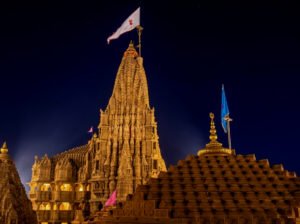
Dwarkadhish Temple
The city’s principal Krishna temple and the centerpiece of most Dwarka pilgrimages.
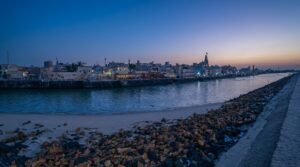
Gomti Ghat
The sacred waterfront below the Dwarkadhish Temple, ideal for a short morning or evening visit.
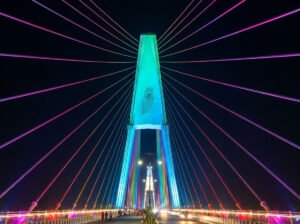
Sudama Setu
A pedestrian suspension bridge across the Gomti area offering a different perspective of the sacred waterfront.
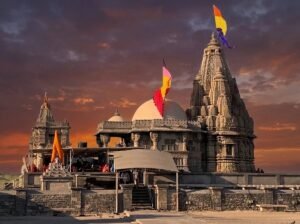
Rukmini Devi Temple
The famous standalone shrine of Goddess Rukmini, located outside the immediate central temple area.
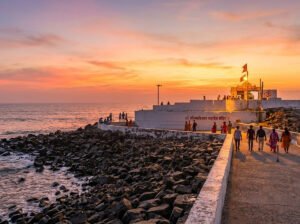
Bhadkeshwar Mahadev Temple
A coastal Shiva temple known for its dramatic setting beside the Arabian Sea.
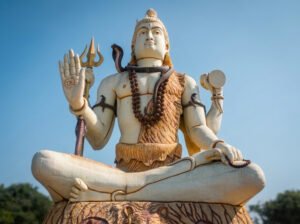
Nageshwar Jyotirlinga
One of the major Shiva pilgrimage destinations generally included in a wider Dwarka circuit.
A Convenient Dwarka Temple Circuit
Bhadrakali Mata Temple is easiest to visit as part of a central Dwarka walking and temple circuit.
Short Local Circuit
Dwarkadhish Temple → Gomti Ghat → Sudama Setu → Bhadrakali Mata Temple
Expanded Temple Circuit
Dwarkadhish Temple → Gomti Ghat → Sudama Setu → Bhadrakali Mata Temple → Rukmini Devi Temple → Bhadkeshwar Mahadev Temple
Full-Day Dwarka Pilgrimage
Dwarkadhish Temple → Gomti Ghat → Bhadrakali Mata Temple → Sudama Setu → Rukmini Devi Temple → Nageshwar Jyotirlinga → Bet Dwarka
Travel times depend on traffic, darshan queues, temple schedules and seasonal conditions.
Photography Tips
The temple’s exterior architecture and entrance can provide interesting heritage photographs, particularly in soft morning or late-afternoon light.
However, photography inside the sanctum should only be done when explicitly permitted. Temple rules can vary, so visitors should follow local instructions rather than assume that photography is allowed.
For architectural photography, look for:
Visitor Etiquette
Bhadrakali Mata Temple is an active place of worship rather than simply a tourist monument.
Visitors should:
Frequently Asked Questions
Is Bhadrakali Mata Temple in Dwarka a Shaktipeeth?
The temple is identified as a Shaktipeeth in some traditional and devotional listings, including lists that place Bhadrakali at Dwarka among Gujarat’s Shaktipeeth sites. However, Shaktipeeth lists differ across traditions, so the identification is best described as a traditional/local attribution rather than a universally standardized classification.
Where is Bhadrakali Mata Temple in Dwarka?
The temple is located in the Bhadrakali Chowk area of Dwarka, near the central pilgrimage zone and the Dwarkadhish Temple. A heritage survey identifies it opposite the Municipality Office at Bhadrakali Chowk.
What is Bhadrakali Mata Temple famous for?
The shrine is known for its worship of Goddess Bhadrakali, its association with Dwarka’s Shakta traditions, and its identification as a Shaktipeeth in some pilgrimage traditions.
How far is Bhadrakali Temple from Dwarkadhish Temple?
The shrine is in the central Dwarka area and is close enough to be included in a local walking or short auto-rickshaw circuit. Exact walking distance varies by the route used.
Is Bhadrakali Mata Temple worth visiting in Dwarka?
Yes, particularly for pilgrims and travelers interested in lesser-known temples, Shakta traditions and Dwarka’s historic urban heritage.
How long should I spend at Bhadrakali Mata Temple?
Around 15–30 minutes is usually enough for a short visit, though devotees attending prayers or rituals may stay longer.
What is the best time to visit Bhadrakali Mata Temple?
October to March is generally the most comfortable season for a Dwarka sightseeing trip. Morning and early evening are good choices for temple visits.
Does Bhadrakali Mata Temple have a fixed opening time?
A reliable current official timetable is not readily available online. Temple directories currently show no verified timing data, so it is better to confirm locally before visiting at a specific time.
Is there an entry fee?
There is no standard tourist entry fee publicly documented for the temple. Normal darshan is generally approached as a temple visit rather than a ticketed attraction.
Can I take photographs inside Bhadrakali Mata Temple?
Do not assume that photography is allowed inside the sanctum. Follow the temple’s current instructions and ask permission before photographing restricted areas, rituals or people.
Is Bhadrakali Mata Temple near Bhadrakali Chowk?
Yes. Bhadrakali Temple is specifically identified at Bhadrakali Chowk in a Dwarka heritage survey.
Which temples can I visit with Bhadrakali Mata Temple?
The easiest combination includes Dwarkadhish Temple, Gomti Ghat, Sudama Setu, Rukmini Devi Temple and Bhadkeshwar Mahadev Temple. For a longer pilgrimage day, add Nageshwar Jyotirlinga and Bet Dwarka.
Is Bhadrakali Mata Temple suitable for a family pilgrimage?
Yes. Its central location and relatively short visit duration make it easy to include in a family-friendly Dwarka temple circuit.
Spiritual and Religious Value
Bhadrakali Mata Temple offers a different perspective on Dwarka. The city is best known for Krishna and the grand Dwarkadhish Temple, but its religious identity is broader, with traditions dedicated to Shakti and Shiva forming an important part of its sacred landscape.
For travelers, the temple is best experienced not as an isolated monument but as part of old Dwarka’s interconnected network of shrines, ghats, streets and pilgrimage landmarks.
A short visit here can add an important Shakta dimension to a Dwarka itinerary while also introducing visitors to one of the city’s quieter heritage corners.