


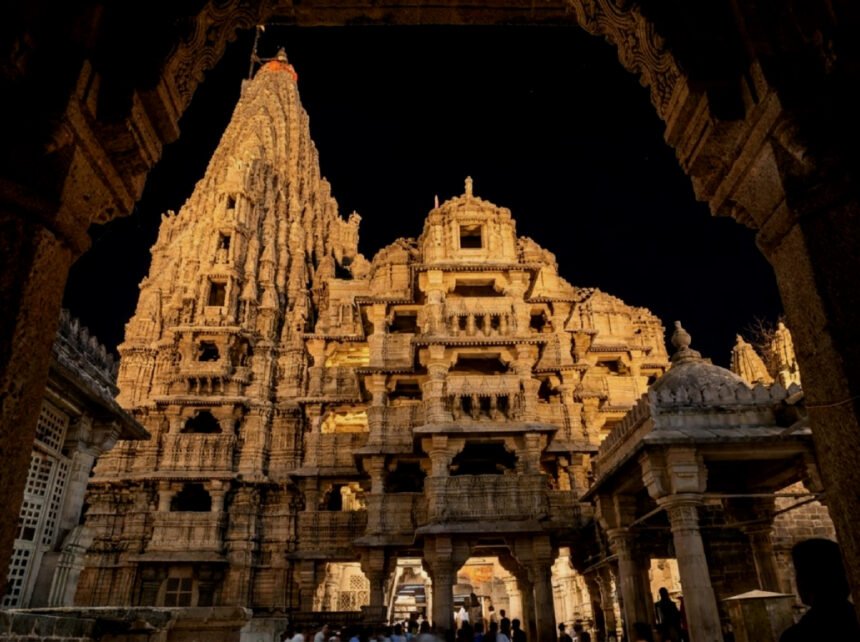
Dwarkadhish Temple, also known as Jagat Mandir or Nij Mandir, is the spiritual heart of Dwarka and one of the most important pilgrimage temples in Gujarat. Dedicated to Lord Krishna as Dwarkadhish, “King of Dwarka,” the temple attracts pilgrims, heritage travelers, photographers, and tourists throughout the year.
- Dwarkadhish Temple Timings
- Dwarkadhish Temple Tourist Information
- Why Visit Dwarkadhish Temple?
- The Story of Dwarkadhish
- History of Dwarkadhish Temple
- Architecture of Dwarkadhish Temple
- The 56 Steps of Dwarkadhish Temple
- Swarga Dwar and Moksha Dwar
- Inside the Temple
- Darshan and Aarti
- Temple Dress Code and Visitor Etiquette
- Photography at Dwarkadhish Temple
- Gomti Ghat and Dwarkadhish Temple
- Sudama Setu
- Dwarka’s Relationship With Rukmini Devi Temple
- Festivals at Dwarkadhish Temple
- Best Time to Visit Dwarkadhish Temple
- How Long Do You Need at Dwarkadhish Temple?
- How to Reach Dwarkadhish Temple
- Getting Around Dwarka
- Nearby Places to Visit
- Recommended One-Day Dwarka Itinerary
- Dwarka and the Submerged City Tradition
- The Legend of Dwarka’s Submergence
- What Makes Dwarkadhish Temple Special?
- Frequently Asked Questions
- Pilgrimage prioritize Travel Tips
The temple is traditionally associated with Krishna’s legendary kingdom of Dwarka and forms an important part of the Char Dham pilgrimage circuit. It is also counted among the Sapta Puri, the seven sacred cities associated with liberation in Hindu tradition.
For first-time visitors, however, Dwarkadhish Temple can be more than a place of worship. Its soaring shikhara, ancient traditions, sacred gates, daily aartis, Gomti Ghat setting, and surrounding pilgrimage streets make it one of the most memorable places to experience in Dwarka.
Dwarkadhish Temple Timings
Dwarkadhish Temple Tourist Information
| Detail | Information |
|---|---|
| Temple Name | Dwarkadhish Temple / Jagat Mandir / Nija Mandir |
| Location | Dwarka, Devbhumi Dwarka, Gujarat |
| Main Deity | Lord Krishna as Dwarkadhish |
| Religious Significance | Char Dham and Sapta Puri |
| Temple Style | Traditional Nagara / Maru-Gurjara influences |
| Best Time to Visit | October to March for comfortable sightseeing |
| Visit Duration | About 1–2 hours, depending on queues and rituals |
| Nearby Landmark | Gomti Ghat |
| Recommended Visit | Early morning or before the main evening rush |
Important: Temple opening hours, darshan arrangements, security rules and special-access procedures can change by season, festival and temple administration. Check the current local schedule before visiting.
Why Visit Dwarkadhish Temple?
A visit to Dwarka is rarely complete without experiencing the Dwarkadhish Temple.
The temple combines several layers of significance:
Even travelers who are not religiously inclined often appreciate the temple for its architecture, history, ceremonial traditions and unique setting in the old city.
The Story of Dwarkadhish
Dwarkadhish means “Lord of Dwarka.” The temple is dedicated to Krishna in his royal form as the ruler of the legendary city.
According to Hindu tradition, Krishna established Dwarka after leaving Mathura. The city became his kingdom and the center of the Yadava dynasty.
The story of Dwarka subsequently became one of the great narratives of Indian sacred geography. The modern city is believed by devotees to preserve the spiritual legacy of that ancient kingdom, while archaeological investigations along the coast have also produced evidence of earlier settlements and maritime activity in the Dwarska region.
History of Dwarkadhish Temple
The history of Dwarkadhish Temple combines religious tradition, historical reconstruction and archaeological interpretation, and these should not be treated as exactly the same thing.
According to temple tradition, an early shrine at Dwarka is associated with Vajranabha, regarded in Hindu tradition as Krishna’s great-grandson.
The present monumental temple, however, reflects multiple periods of construction, destruction and rebuilding. Its architectural character is strongly associated with medieval Gujarat and the Solanki / Maru-Gurjara tradition.
The temple and the wider sacred landscape of Dwarka experienced periods of political disruption, after which reconstruction and restoration took place over the centuries.
For travelers, this layered history is important: what you see today is not simply a single structure from one historical period, but a living temple shaped by generations of worship, rebuilding and conservation.
Architecture of Dwarkadhish Temple
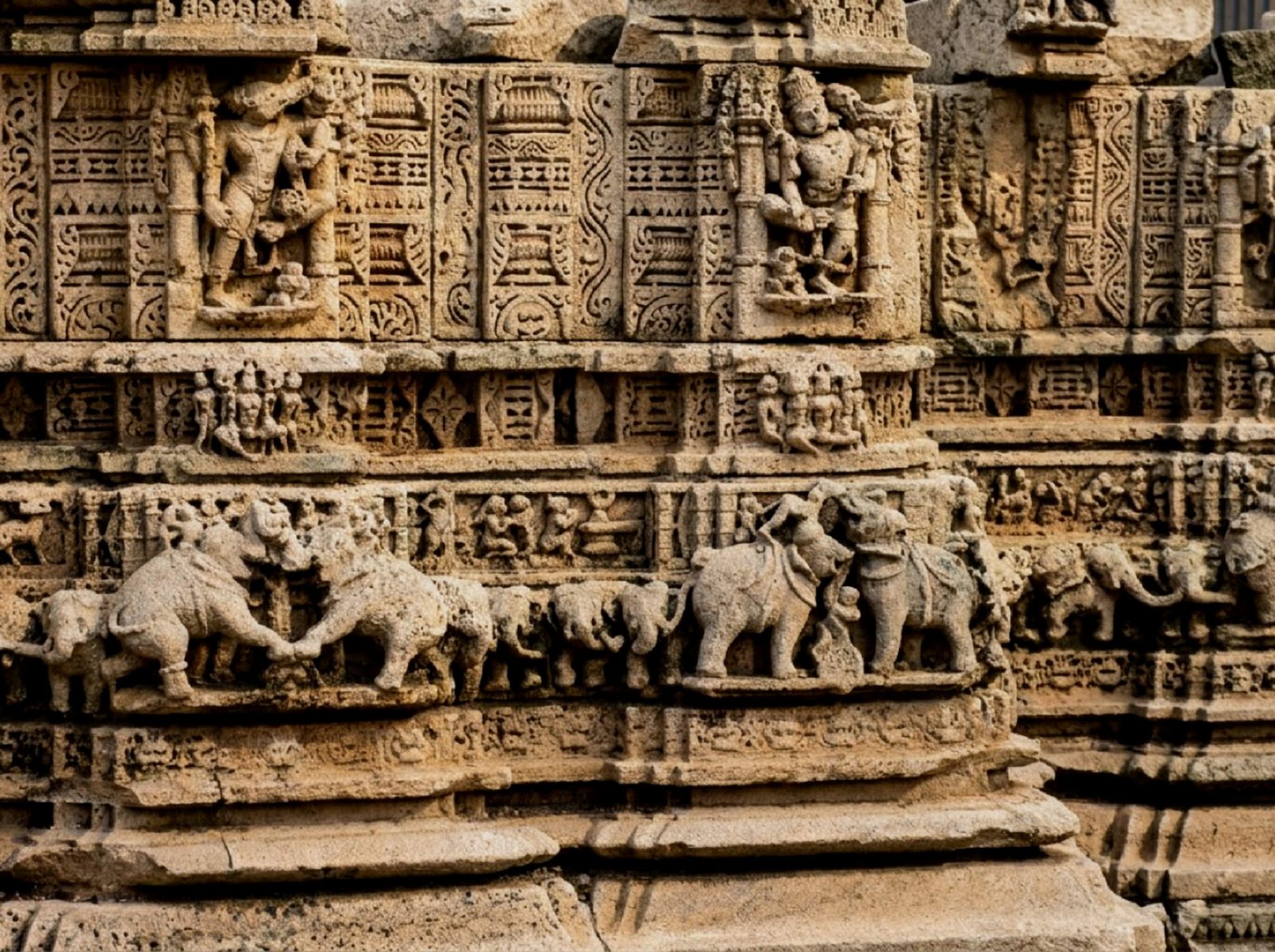
One of the first things visitors notice is the temple’s extraordinary vertical scale.
The main structure rises above the historic city with a prominent shikhara, making it a landmark visible from parts of Dwarka and the surrounding pilgrimage zone.
The architecture is characterized by:
The temple is commonly described in connection with the Nagara tradition, with strong western Indian architectural characteristics.
The 56 Steps of Dwarkadhish Temple
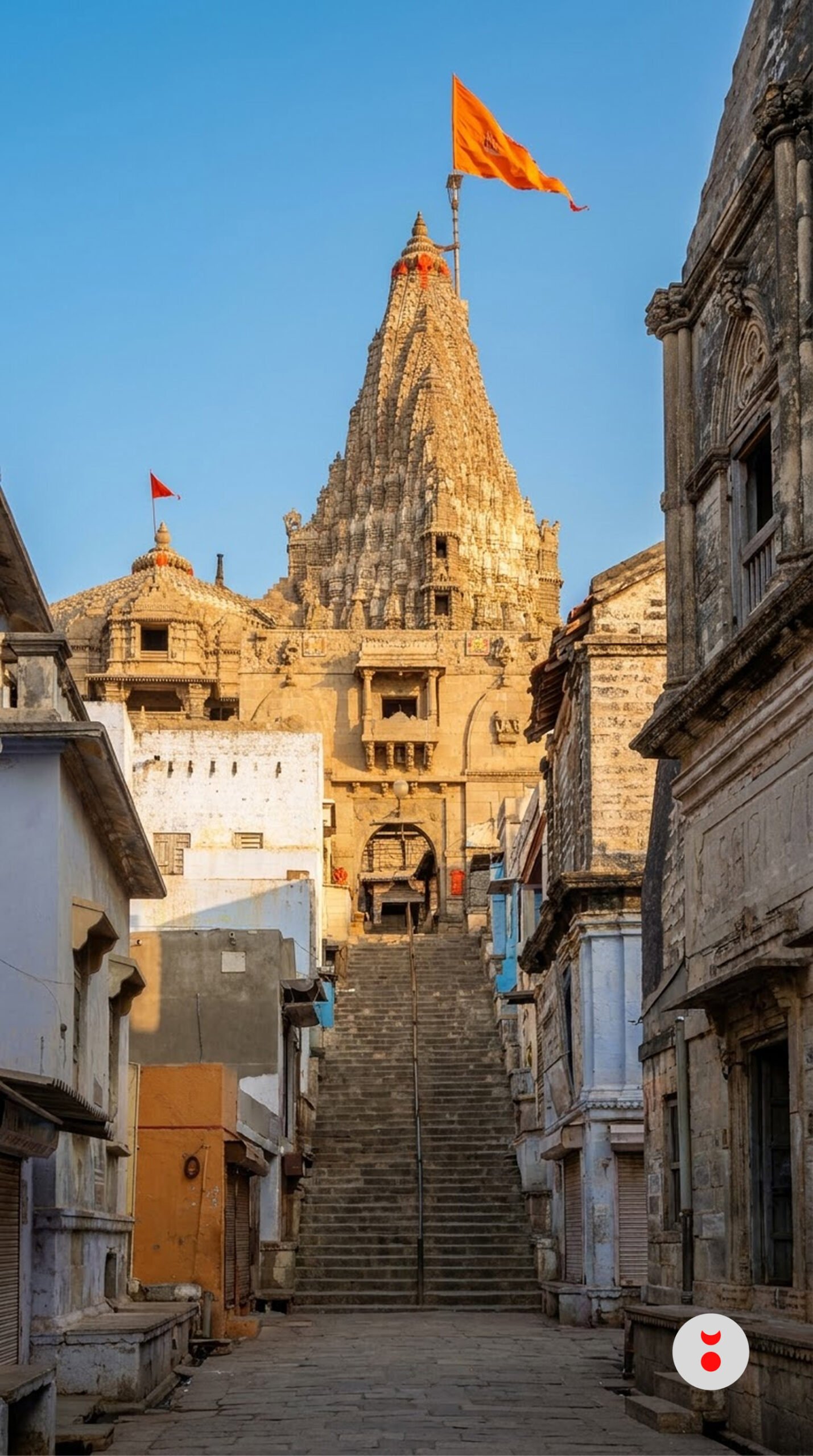
One of the most memorable parts of the pilgrimage is the climb to the temple entrance from Gomti Ghat.
Traditionally, pilgrims ascend 56 steps toward the Swarga Dwar, the main entrance of the temple.
The number 56 has been given different religious interpretations, including associations with Chhappan Bhog, the traditional offering of 56 food items.
For visitors, climbing the steps is also part of the physical transition from the busy market area into the sacred temple precinct.
Swarga Dwar and Moksha Dwar
The temple has two especially significant gateways:
Swarga Dwar
Swarga Dwar, meaning “Door of Heaven,” is traditionally associated with the principal entrance.
Pilgrims approach the temple by climbing the famous steps from the Gomti side.
Moksha Dwar
Moksha Dwar, meaning “Door of Liberation,” serves as the exit route.
Together, these two gateways create a symbolic pilgrimage movement – from entering the sacred space toward divine vision and eventually proceeding toward liberation.
Inside the Temple
At the center of the temple is the sacred shrine of Dwarkadhish, the form of Krishna worshipped as king of the city.
The atmosphere inside can change dramatically depending on the time of day. During quieter periods, visitors may experience the ritual environment more intimately; during major darshan periods, the temple can become extremely busy.
The sanctum is governed by traditional temple practices, and visitors should follow all current instructions regarding dress, security, queues, phones and photography.
Darshan and Aarti
A major reason pilgrims plan their Dwarka itinerary around the temple is the opportunity to participate in darshan and aarti.
Daily worship traditionally includes several ritual periods, with morning and evening ceremonies forming important parts of the devotional schedule.
Because the exact timing can vary, especially during festivals and special observances, avoid publishing a permanent schedule unless it has been confirmed directly with the temple administration.
For travelers, an early morning visit is often the most comfortable choice because:
Temple Dress Code and Visitor Etiquette
Dwarkadhish Temple is an active and highly revered place of worship.
Visitors should dress modestly and be prepared to follow temple security procedures.
Traditional pilgrimage etiquette includes:
Security restrictions may apply to mobile phones, cameras, bags, leather items and other personal belongings. Policies can change, so travelers should check current instructions before entering.
Photography at Dwarkadhish Temple
Photography restrictions are an important part of planning a visit.
The interior and sanctum areas may have strict restrictions, and visitors should never assume that photography is permitted.
Instead, focus on photographing permitted exterior areas such as:
Always follow the latest temple rules.
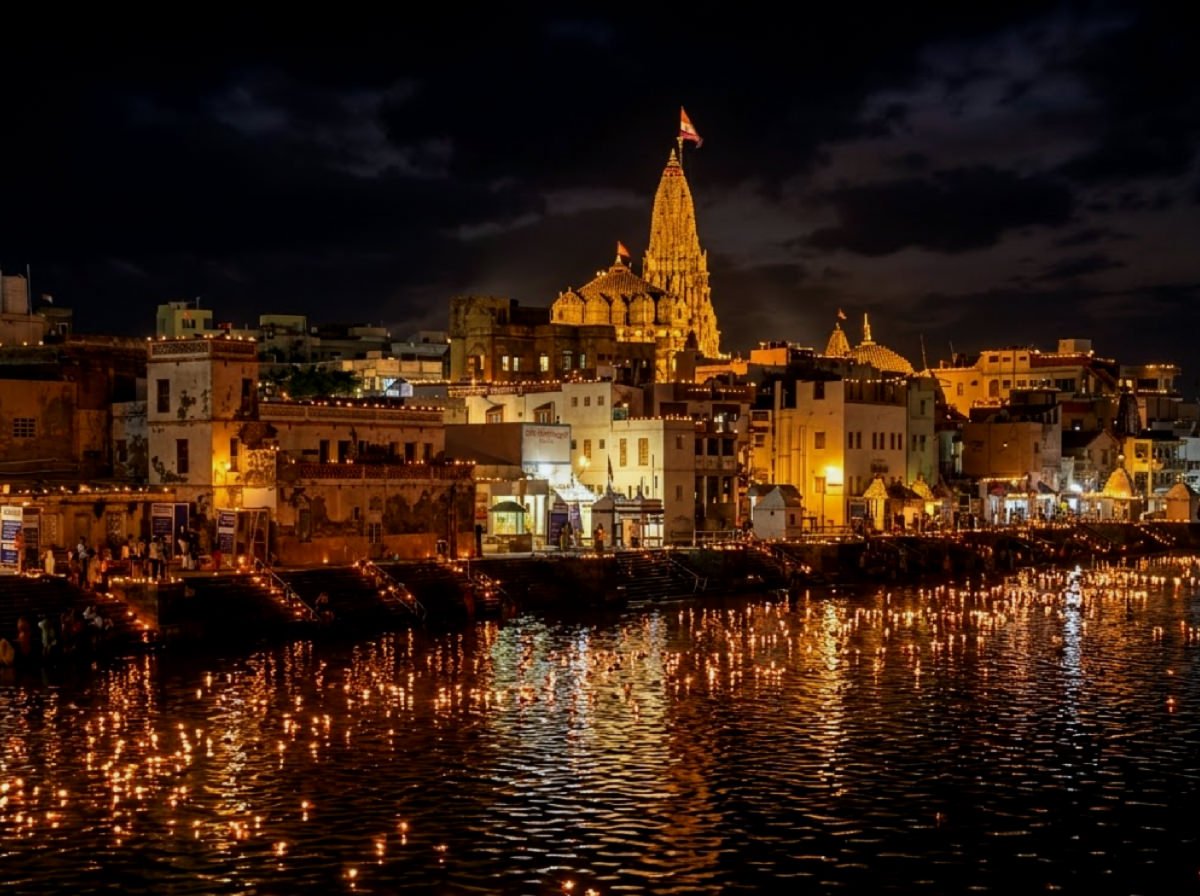
Gomti Ghat and Dwarkadhish Temple
One of the best ways to understand the location of the temple is to visit Gomti Ghat.
The sacred waterfront lies directly below the temple complex and forms an important part of Dwarka’s pilgrimage geography.
Many visitors combine:
Dwarkadhish Temple → Gomti Ghat → Sudama Setu
This creates an easy walking circuit and allows you to experience both the temple and the waterfront landscape.
Sudama Setu
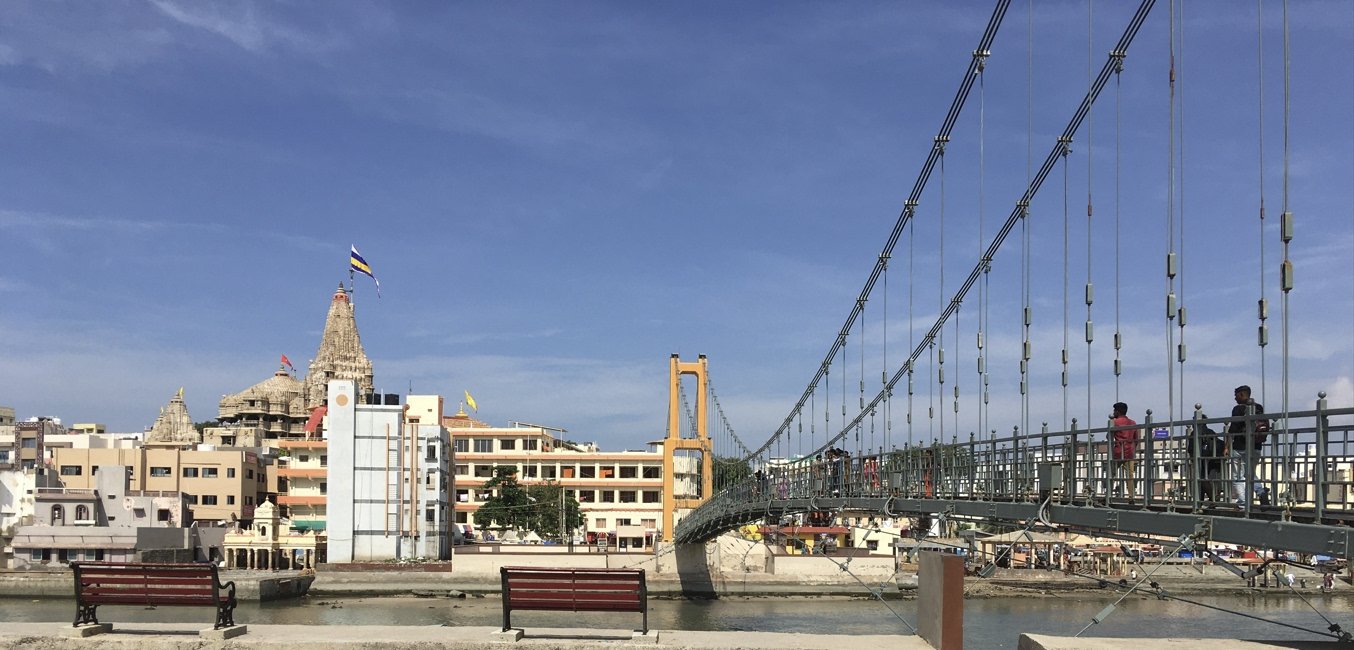
Sudama Setu is a pedestrian suspension bridge near Gomti Ghat.
Crossing the bridge offers views of:
It is especially attractive around sunrise and sunset and works well as a companion attraction after visiting Dwarkadhish Temple.
Dwarka’s Relationship With Rukmini Devi Temple
The pilgrimage tradition of Dwarka extends beyond the main temple.
Rukmini Devi Temple, dedicated to Goddess Rukmini, is located about 2 km away from the main Dwarkadhish Temple area.
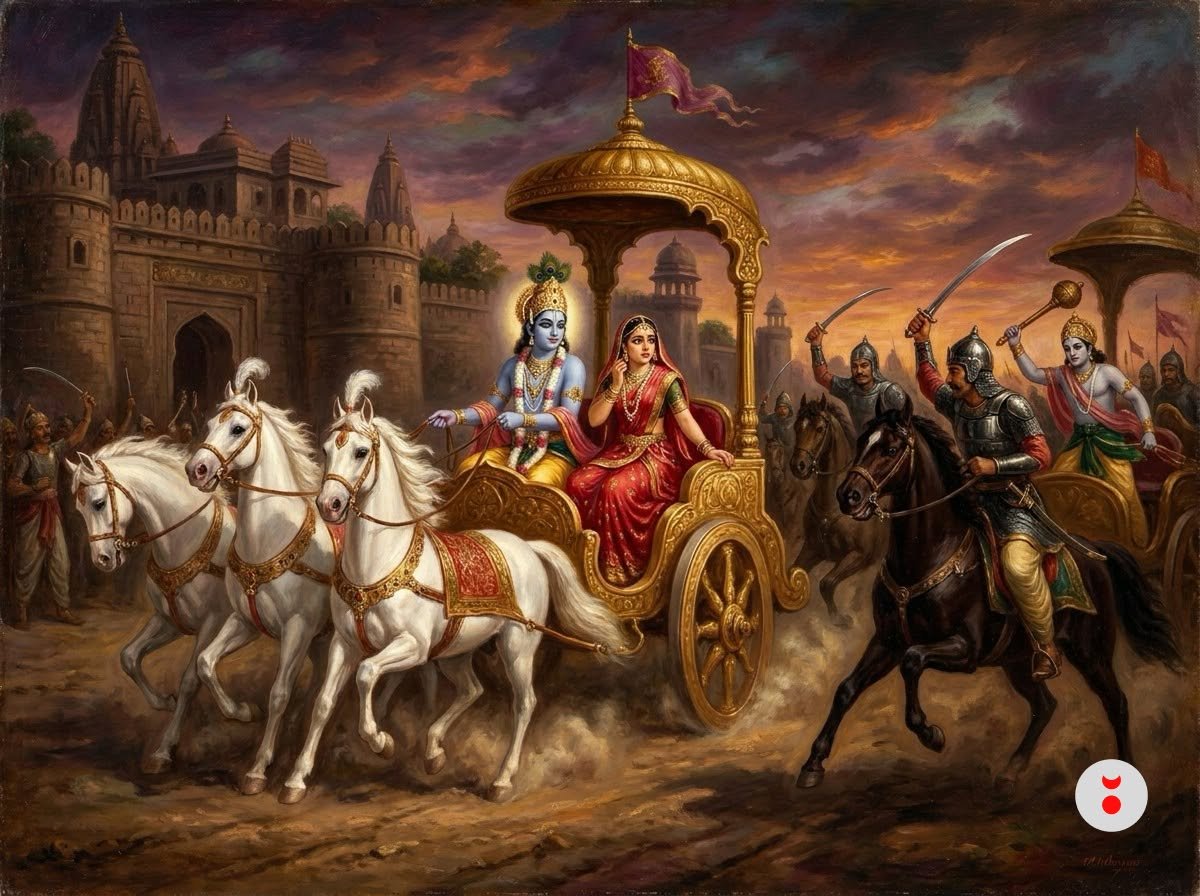
According to the famous Durvasa curse legend, Krishna and Rukmini were separated after an incident involving Sage Durvasa. The physical distance between their shrines is therefore deeply woven into regional religious storytelling.
For devotees, visiting both temples completes an important part of the Dwarka pilgrimage.
Festivals at Dwarkadhish Temple
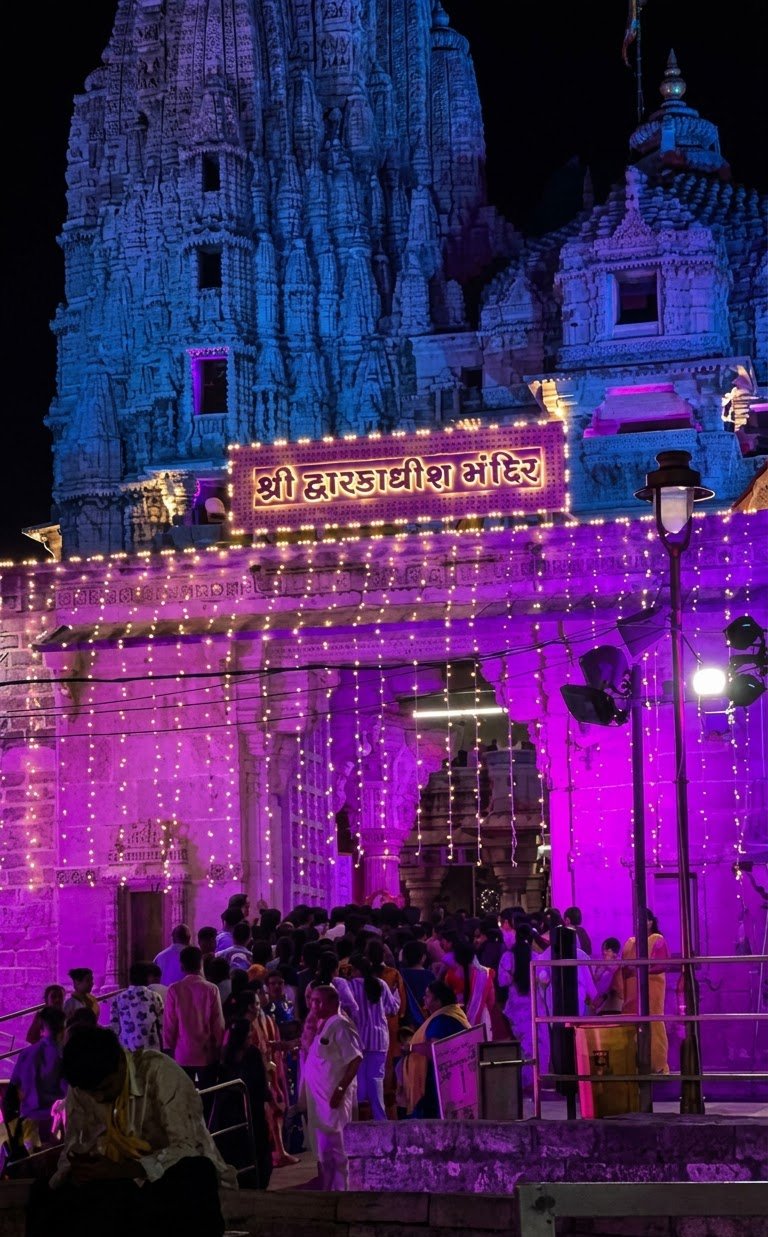
Dwarkadhish Temple is particularly vibrant during major Hindu festivals.
Important occasions include:
Janmashtami
The celebration of Krishna’s birth is one of the most important events of the year. The temple becomes especially lively with devotional singing, rituals, decorations and large numbers of pilgrims.
Holi
Holi brings a festive atmosphere to the Krishna pilgrimage tradition.
Diwali
The temple and surrounding pilgrimage area become especially atmospheric during the festival of lights.
Rukmini Ashtami
This celebration is associated with Goddess Rukmini and connects directly with the wider Dwarka temple circuit.
Festival crowds can be significantly larger than on ordinary days, so accommodation and transportation should be arranged early.
Best Time to Visit Dwarkadhish Temple
October to March
This is generally the most comfortable period for exploring Dwarka because temperatures are more suitable for walking between attractions.
Summer
April to June can be hot. Early morning and evening visits are preferable for outdoor sightseeing.
Monsoon
The coastal landscape can become dramatic during the monsoon, but rain and weather conditions may affect outdoor plans.
Festival Season
Festivals offer the most vibrant religious experience but also bring larger crowds and longer queues.
How Long Do You Need at Dwarkadhish Temple?
For a straightforward temple visit, allow around 1–2 hours.
You may need considerably more time during:
For a broader Dwarka experience, set aside at least one full day.
How to Reach Dwarkadhish Temple
By Train
Dwarka Railway Station is the city’s principal rail connection.
From the station, the temple area can be reached by local auto-rickshaw, taxi or other local transport.
By Road
Dwarka is well connected with Jamnagar, Rajkot and other cities of Gujarat.
Visitors arriving from Rajkot can travel west toward Dwarka through the Saurashtra road network.
By Air
Travelers can use airports serving the wider Gujarat and Saurashtra region and continue to Dwarka by road or rail.
Because airport routes and airline schedules can change, check current services when planning your trip.
Getting Around Dwarka
The central pilgrimage area is relatively compact.
Auto-rickshaws
Useful for:
Walking
Walking is an excellent way to explore the Dwarkadhish Temple, Gomti Ghat, Sudama Setu and nearby heritage streets.
Taxi
A taxi is more convenient for a wider circuit involving:
Nearby Places to Visit
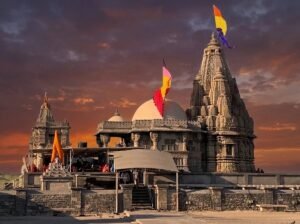
Rukmini Devi Temple
A beautiful standalone shrine dedicated to Goddess Rukmini.
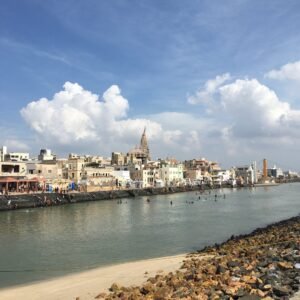
Gomti Ghat
A sacred waterfront directly connected with the Dwarkadhish pilgrimage.
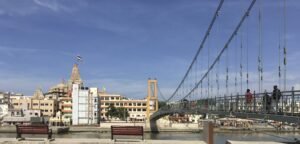
Sudama Setu
A pedestrian bridge offering excellent views of the waterfront.
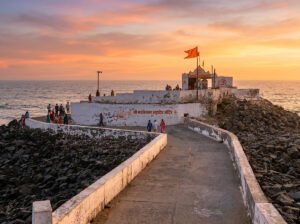
Bhadkeshwar Mahadev Temple
A coastal Shiva shrine with a dramatic Arabian Sea setting.
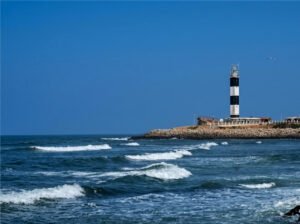
Dwarka Lighthouse
A popular coastal viewpoint and photography spot.
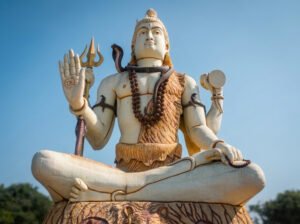
Nageshwar Jyotirlinga
One of the major Shiva pilgrimage sites associated with the Dwarka region.

Bet Dwarka
A sacred island traditionally connected with Krishna.
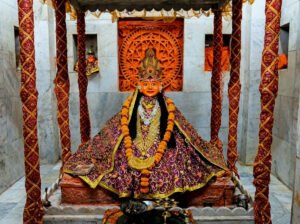
Bhadrakali Mata Temple
A lesser-known Shakta shrine (shaktipeeth) in the central Dwarka area.
Recommended One-Day Dwarka Itinerary
Morning
6:00–8:00 AM – Dwarkadhish Temple
Start with darshan before the day’s heat and crowds build.
After Darshan
Gomti Ghat
Spend some time at the sacred waterfront.
Morning
Sudama Setu
Walk across the bridge and enjoy the views.
Late Morning
Rukmini Devi Temple
Travel to the shrine dedicated to Krishna’s queen.
Afternoon
Take a lunch and rest break.
Afternoon / Evening
Bhadkeshwar Mahadev Temple
Enjoy the coastal setting.
Evening
Dwarka Lighthouse / coastal viewpoint
Finish the day with sunset near the Arabian Sea.
For a longer pilgrimage day, add Nageshwar Jyotirlinga and Bet Dwarka.
Dwarka and the Submerged City Tradition
One of the most fascinating aspects of visiting Dwarka is the connection between scriptural tradition and marine archaeology.
Ancient texts describe a magnificent Dwarka that eventually disappeared beneath the sea.
Marine archaeological investigations in the region have identified submerged structural remains and evidence of past maritime activity.
These discoveries have made Dwarka an important subject not only for pilgrims but also for:
It is important, however, to distinguish archaeological evidence for ancient settlements and maritime activity from the theological narrative of Krishna’s legendary city. They illuminate different dimensions of Dwarka’s past.
The Legend of Dwarka’s Submergence
According to Hindu tradition, the Yadava kingdom eventually came to an end after a series of tragic events.
Following Krishna’s departure from the earthly world, the city of Dwarka was said to have been reclaimed by the sea.
The story of the submerged city is one of the defining elements of Dwarka’s spiritual identity and is deeply connected with the city’s relationship with the Arabian Sea.
What Makes Dwarkadhish Temple Special?
Many temples are ancient, but Dwarkadhish stands apart because it combines several dimensions at once.
It is simultaneously:
The experience is therefore not limited to entering the temple. The surrounding ghats, gates, streets, shrines and coastal sites are all part of the larger pilgrimage landscape.
Frequently Asked Questions
Why is Dwarkadhish Temple famous?
Dwarkadhish Temple is famous as the principal Krishna temple of Dwarka and for its association with the Char Dham pilgrimage circuit, Krishna’s legendary kingdom, medieval temple architecture and centuries-old devotional traditions.
Is Dwarkadhish Temple one of the Char Dham?
Yes. Dwarka is traditionally recognized as one of the four principal Char Dham pilgrimage destinations.
Who is the main deity of Dwarkadhish Temple?
The principal deity is Lord Krishna, worshipped here in his royal form as Dwarkadhish, the King of Dwarka.
What is the old name of Dwarkadhish Temple?
The temple is also commonly known as Jagat Mandir and Nija Mandir.
How much time is required to visit Dwarkadhish Temple?
Allow around 1–2 hours for an ordinary visit, although festival crowds and darshan queues can make the visit considerably longer.
What are the best timings to visit Dwarkadhish Temple?
Early morning is generally a good choice for a calmer pilgrimage experience. Exact darshan and aarti timings should be checked locally because they can change.
Can tourists take mobile phones inside Dwarkadhish Temple?
Restrictions may apply to mobile phones, cameras and other belongings. Travelers should check the current temple security rules rather than rely on older information.
Is there an entry fee at Dwarkadhish Temple?
Ordinary temple darshan is generally not treated as a standard tourist ticketed attraction. Special services or arrangements, where available, may follow separate rules.
Can I visit Dwarkadhish Temple and Rukmini Devi Temple on the same day?
Yes. The two temples are commonly visited together as part of a Dwarka pilgrimage.
How far is Rukmini Devi Temple from Dwarkadhish Temple?
Rukmini Devi Temple is approximately 2 km from the main Dwarkadhish Temple area.
What should I wear to Dwarkadhish Temple?
Wear modest, respectful clothing appropriate for a Hindu place of worship. Be prepared to remove footwear and follow any current temple dress requirements.
Is photography allowed inside Dwarkadhish Temple?
Photography restrictions can apply, particularly around the sanctum and interior. Always follow the current instructions of temple authorities.
What should I visit after Dwarkadhish Temple?
A convenient nearby sequence is:
Gomti Ghat → Sudama Setu → Rukmini Devi Temple → Bhadkeshwar Mahadev Temple
For a full-day itinerary, add Nageshwar Jyotirlinga and Bet Dwarka.
What is the best time to visit Dwarka?
For comfortable sightseeing, October to March is generally preferable. Festival periods are spiritually vibrant but much busier.
Is Dwarkadhish Temple suitable for senior citizens?
Yes, but visitors should consider the steps, crowds, queues and walking involved. Traveling early and allowing sufficient rest time can make the experience easier.
How do I reach Dwarka from Rajkot?
Dwarka can be reached from Rajkot by road and rail, with road travel being particularly convenient for travelers who want flexibility and stops along the way. Check current schedules and road conditions before departure.
Is Dwarka worth visiting beyond the Dwarkadhish Temple?
Absolutely. A complete Dwarka trip can include Rukmini Devi Temple, Gomti Ghat, Sudama Setu, Bhadkeshwar Mahadev Temple, Dwarka Lighthouse, Nageshwar Jyotirlinga, Bet Dwarka and other smaller shrines.
Pilgrimage prioritize Travel Tips
For the smoothest Dwarka experience, plan your Dwarkadhish Temple visit first, particularly when your trip is built around darshan.
Then explore the surrounding attractions according to distance and opening times.
A practical sequence is:
Dwarkadhish Temple → Gomti Ghat → Sudama Setu → Rukmini Devi Temple → Bhadkeshwar Mahadev Temple → Dwarka Lighthouse
For a longer pilgrimage, continue to:
Nageshwar Jyotirlinga → Bet Dwarka
Most importantly, remember that Dwarkadhish Temple is an active place of worship, not simply a tourist monument. Respecting temple rules, local customs and the devotional environment makes the visit more meaningful for everyone.
“JAY DWARKADHISH”